
TL;DR — Quick Summary
- A high-converting auto finance BDC exists to do one thing: turn raw inbound leads into booked appointments and funded deals through a process that runs identically every time.
- Speed-to-lead is the single biggest conversion lever — dealerships that respond within 5 minutes are 9× more likely to connect than those who wait 30.
- A workable starting ratio is one BDC agent per 75–150 leads per month, with defined roles for first response, follow-up, and appointment confirmation.
- A documented follow-up cadence of 8–12 touchpoints across phone, SMS, and email over 14 days recovers deals that single-call teams lose.
- Lead source matters as much as process: exclusive, pre-screened leads convert at 6–15% because your team is the only one calling.
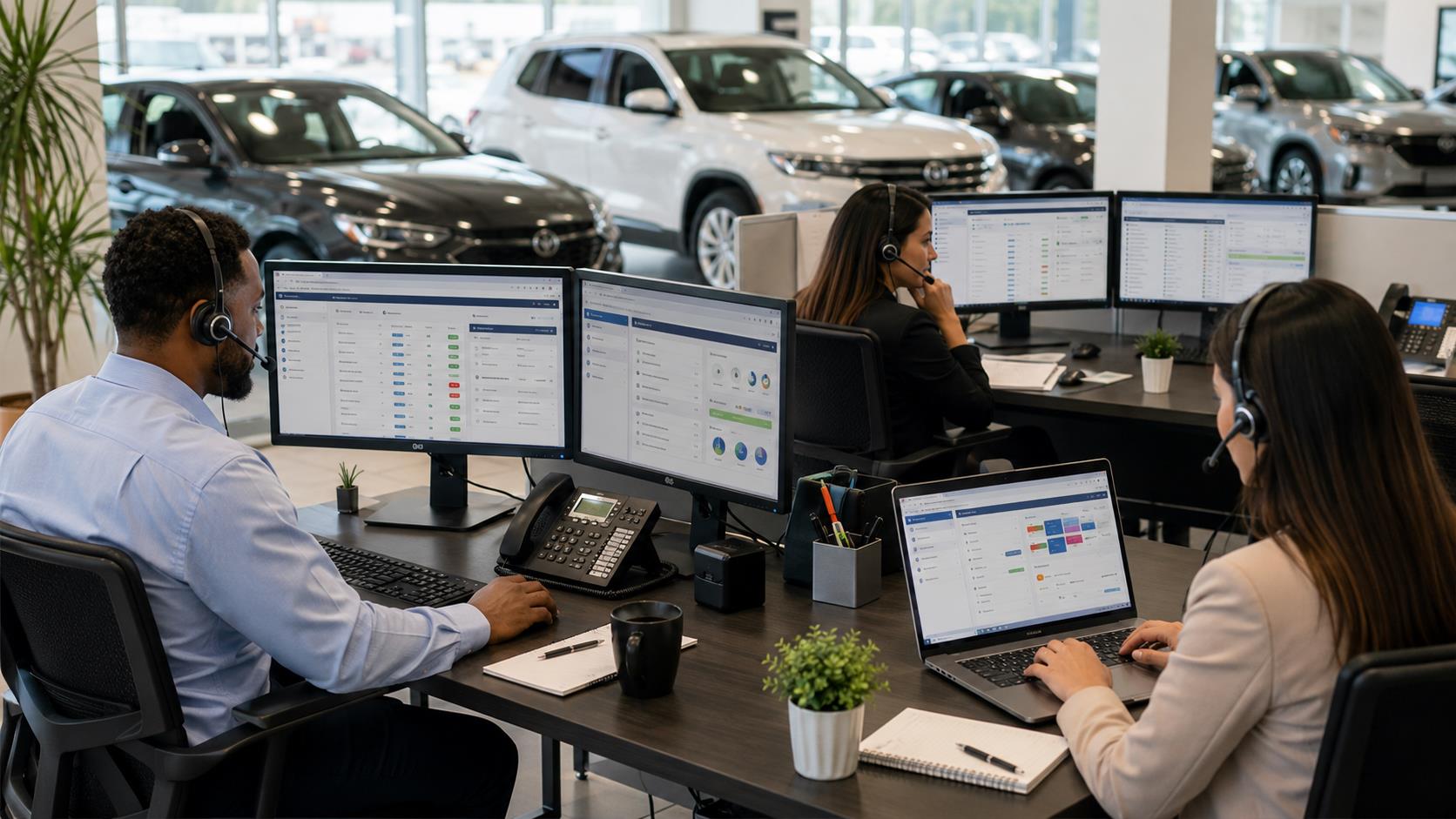
Most dealerships lose deals before a salesperson ever shakes a hand. A lead comes in, sits in a CRM for 40 minutes, gets one rushed call, and goes cold. A high-converting auto finance BDC exists to stop exactly that — to turn inbound interest into booked appointments and funded deals through a process that runs the same way every single time.
The gap between a team that converts 6% of its leads and one that converts 15% is rarely the leads themselves. It comes down to three things you can control: how the team is structured, how fast it responds, and how disciplined the follow-up is after the first call. This guide walks through all three.
AUTOCARLEADS
Is your BDC working harder than it should on recycled leads?
Even a great process stalls when three other dealerships are calling the same buyer. See what exclusive, pre-screened leads do to your connect rate.
What a High-Converting Auto Finance BDC Actually Does
A Business Development Centre (BDC) is the team that owns every lead from the moment it arrives until the buyer is sitting across from an F&I manager. Its job is not to sell the car — it is to make contact fast, qualify intent, and book a confirmed appointment. In an auto finance context, that means handling credit-challenged and prime buyers alike with the same speed and the same script discipline.
The difference between a BDC and a sales floor that “also handles leads” is accountability. When lead response is everyone’s job, it becomes no one’s job. A dedicated BDC has one mandate, one set of metrics, and one owner. That focus is why dealerships with a real BDC consistently outperform those that fold lead handling into floor duties.
The model only works, though, if the leads themselves are worth chasing. A BDC built around how exclusive auto finance leads work spends its hours on buyers who have not already been called five times. Process and lead source are two halves of the same conversion equation — fix one without the other and results stay flat.
The Structure: Roles That Make a BDC Convert
A high-converting BDC needs defined roles, not just headcount. A practical starting ratio is one agent per 75–150 leads per month, scaled by how aggressive your follow-up cadence is. Below that range, agents burn out and touchpoints get skipped; above it, leads still slip through.
For most independent and franchise stores in markets like Ontario and British Columbia, the roles break down into three functions:
- First-response agent — owns the speed window, makes the initial call and SMS within minutes, and qualifies basic intent and budget.
- Follow-up agent — works the cadence on leads that didn’t connect on the first attempt, often the source of 40–50% of booked appointments.
- Appointment coordinator — confirms and reminds, cutting no-show rates that otherwise run as high as 50% on unconfirmed appointments.
In a small store, one person may wear all three hats — but the functions still need to be written down and measured separately. A BDC manager sits above the team, owns the metrics dashboard, and reviews call recordings weekly. That coaching loop is what separates a team that improves from one that plateaus.
Speed-to-Lead: The Single Biggest Conversion Lever
Speed-to-lead is the response time between a lead arriving and your first contact attempt — and it predicts conversion more reliably than almost anything else. The industry benchmark is well documented: contact within 5 minutes, every time. After that window, connect rates fall off a cliff and the buyer’s attention moves to the next dealership.
“Dealerships that follow up within 5 minutes of a lead submission are 9× more likely to connect with the buyer than those who wait 30 minutes.” — MIT Lead Response Management Study
The practical problem is that no human team answers every lead in five minutes around the clock. The fix is automation on the front edge — an instant SMS that lands the moment the lead arrives, holding the buyer’s attention until an agent calls. Understanding why speed-to-lead determines deal outcomes is the reason this matters more than headcount.
⚠️ Speed-to-Lead Warning: A lead that sits unworked for 30 minutes is not “still warm.” Most online auto finance applicants submit to more than one source. If your BDC is not first, you are paying full price for a lead that another dealership is already closing.
AUTOCARLEADS
Canadian dealerships close 6–15% of Autocarleads inbound leads.
Every lead is 100% exclusive, pre-screened for a minimum verified income of $1,800/month, and backed by AI-powered SMS follow-up that fires within 5 minutes — so your BDC starts ahead instead of catching up.
Scripts and Follow-Up Cadence That Close
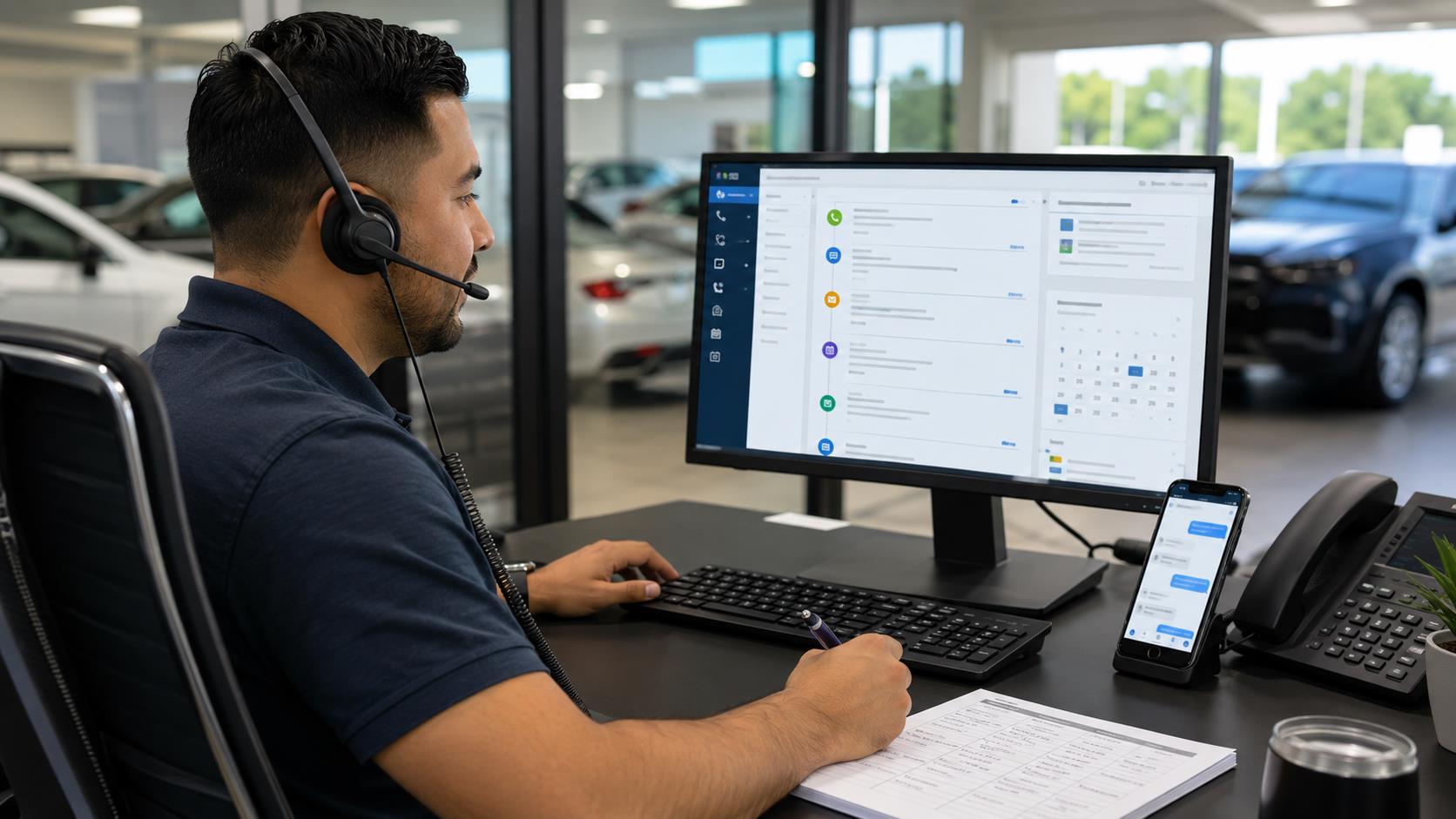
A high-converting BDC runs on a documented cadence, not improvisation. The teams that win book most of their appointments on attempts two through six — yet the average dealership stops after one call. A baseline cadence of 8–12 touchpoints across phone, SMS, and email over 14 days recovers the deals single-call teams hand to competitors.
Scripts should open with the buyer’s stated goal, not the dealership’s pitch. For auto finance leads, the first call confirms three things fast: that the buyer still wants a vehicle, that their income situation is roughly what the application showed, and that they can come in. The agent’s only goal on call one is the appointment — not the sale, not the rate, not the term.
Subprime buyers need a different tone than prime buyers. They are often anxious about being declined, so the script leads with reassurance and approval odds rather than vehicle selection. A team trained in working with subprime and bad-credit buyers converts a segment most floors mishandle. Knowing which lead is which before the call begins — through proper lead pre-screening and income verification — lets the agent pick the right script from the first ring.
The Tech Stack: CRM, Dialer, and SMS Automation
A BDC is only as fast as its tools. Three systems do the heavy lifting: a CRM that routes leads instantly and logs every touch, a dialer that removes the friction of manual calling, and SMS automation that covers the five-minute window when an agent can’t.
The most common failure point is lead routing. If a new application lands in an inbox or a shared queue instead of pinging a specific agent, you have already lost the speed game. Set the CRM to assign and alert on arrival, with an escalation rule if no contact attempt is logged within minutes.
SMS automation is where many Canadian dealerships gain the most ground. An instant, personalized text the moment a lead comes in keeps the buyer engaged while the agent dials. This is built into how the Autocarleads delivery process works — every delivered lead triggers AI-powered SMS follow-up inside five minutes, so the front edge of your cadence runs whether or not the phones are staffed.
Measuring BDC Performance: The Metrics That Matter
You cannot improve a BDC you don’t measure. Five numbers tell you almost everything about whether the team is converting or leaking deals:
- Average speed-to-lead — first contact time across all leads; the target is under 5 minutes.
- Contact rate — the share of leads reached by a live conversation; healthy teams clear 60–70% on exclusive leads.
- Appointment-set rate — contacted leads that book a confirmed visit.
- Show rate — booked appointments that actually arrive, the metric the coordinator role protects.
- Lead-to-sale conversion — the bottom line, typically 6–15% on quality auto finance leads.
Track these weekly and review them per agent. A team converting 6% isn’t necessarily working less hard than one at 15% — more often it is bleeding deals at a single, identifiable stage. When the numbers stall despite a tight process, the constraint is usually the lead source itself, which is why the leads feeding the BDC deserve the same scrutiny as the team running it.
Frequently Asked Questions
What is a BDC in auto finance?
A BDC, or Business Development Centre, is the dedicated team that handles every auto finance lead from arrival to confirmed appointment. Its job is to respond fast, qualify the buyer’s intent and budget, and hand a booked, show-ready appointment to the sales or F&I team — not to sell the vehicle itself.
How many agents does an auto finance BDC need?
A workable starting ratio is one BDC agent per 75–150 leads per month, adjusted for how many touchpoints your cadence requires. Stores with aggressive 8–12 touch follow-up sit at the lower end of that range, while leaner cadences can support more leads per agent.
How fast should a BDC follow up with auto finance leads?
A BDC should make first contact within 5 minutes of a lead arriving. Dealerships that respond inside that window are roughly 9× more likely to connect than those who wait 30 minutes, which is why instant SMS automation is used to cover the gap when an agent can’t dial immediately.
What is a good BDC conversion rate?
A good lead-to-sale conversion rate on quality auto finance leads runs 6–15%, with contact rates of 60–70% on exclusive leads. Shared or recycled leads usually convert well below that range because multiple dealerships are competing for the same buyer.
Should a dealership build or outsource its BDC?
Both can work, and the right choice depends on lead volume and staffing. An in-house BDC gives you direct control of scripts and coaching, while outsourcing covers off-hours and overflow. Either way, conversion still depends on lead quality and speed — a strong process cannot rescue shared, stale leads.
How do exclusive leads improve BDC performance?
Exclusive leads improve BDC performance because your team is the only one calling, so connect and conversion rates rise without changing the process. When a lead is sold to one dealership instead of four, the same scripts and cadence produce more appointments and fewer dead ends.
Give Your BDC Leads Worth Converting
Autocarleads connects Canadian dealerships with exclusive, pre-screened car loan leads — including subprime buyers — delivered in real time with AI-powered SMS follow-up. Every applicant is income-verified before they reach your team.
- ✅ 100% exclusive leads — never shared
- ✅ Lead buyback guarantee
- ✅ No long-term contracts
- ✅ Geo-targeted to your territory
📍 Address: Serving dealerships across all Canadian provinces
📞 Phone: +1-888-510-0264
🌐 Website: Schedule your free consultation at autocarleads.ca
Selling cars is hard enough. Let Autocarleads bring the buyers to you.